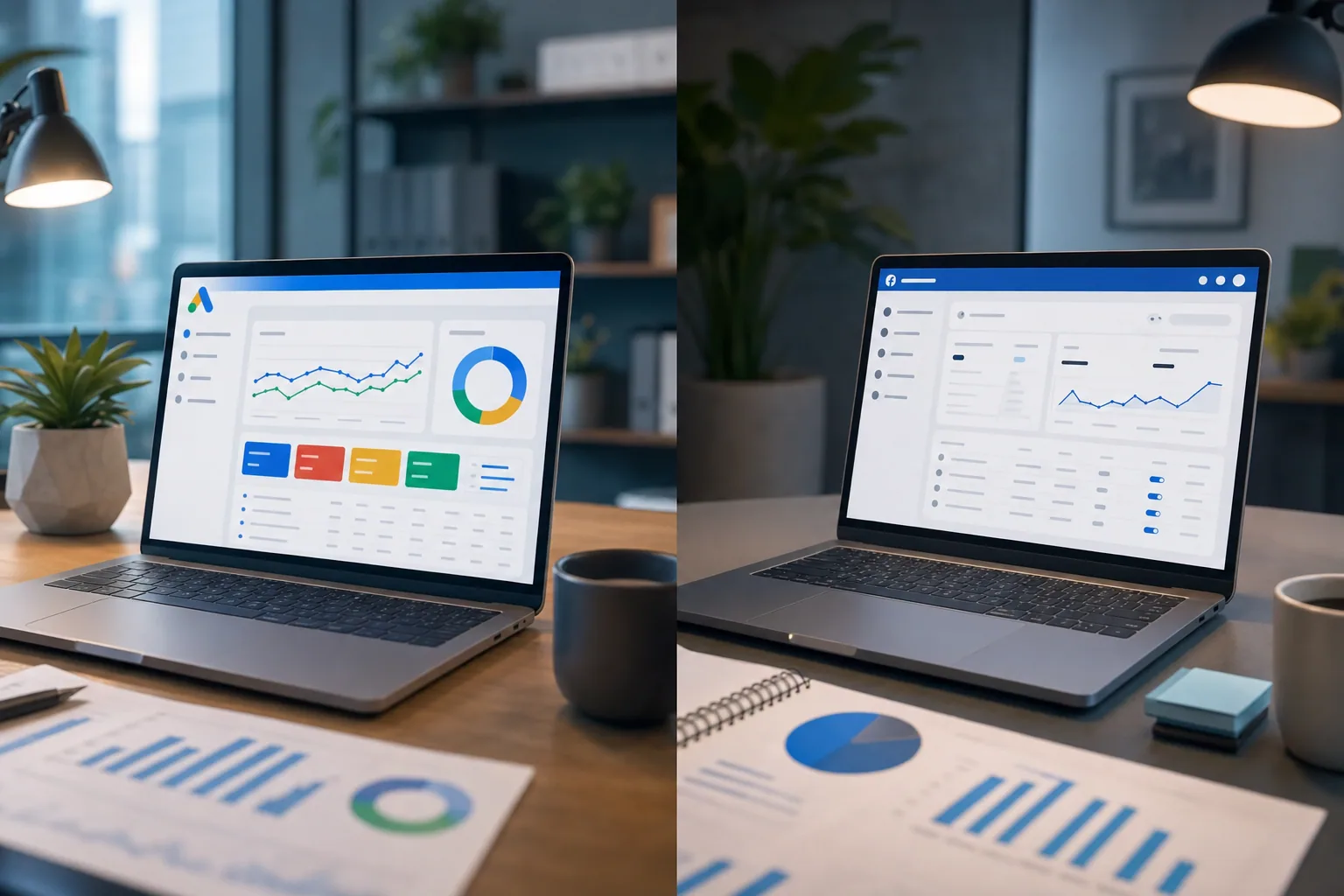
When you're deciding where to spend your advertising budget, the choice between Google Ads and Facebook Ads can feel overwhelming. Both platforms promise to reach your customers and drive sales. But they work in fundamentally different ways, target audiences differently, and suit different business goals.
Understanding how these platforms differ helps you make smarter decisions about where your money goes. The answer isn't always one or the other. Many successful businesses use both. But knowing the strengths of each platform lets you allocate your budget where it will perform best for your specific business.
How Google Ads and Facebook Ads Work Differently
Google Ads and Facebook Ads start with different assumptions about what people want to see.
Google Ads shows your ads to people actively searching for what you offer. Someone types "plumber near me" or "best CRM software," and your ad appears. This is search intent advertising. People are telling Google what they're looking for right now, and your job is to show up with the right answer.
Facebook Ads work the opposite way. They interrupt people's social media feeds with ads based on who they are, what they've liked, and what interests they've shown. This is interest-based and audience-based advertising. People aren't searching for you yet. Facebook's algorithm bets that they might care about your offer based on their profile and behavior.
This fundamental difference shapes everything else about how these platforms perform.
Google Ads: Best for High-Intent Customers
Google Ads excel when people have already decided they want something and are ready to buy or learn more. This high-intent audience is why Google Ads typically has higher conversion rates.
Key advantages of Google Ads include:
- Reach people actively searching for your products or services
- Target specific keywords that match your business
- Lower cost-per-click in many industries
- Faster path to conversion since intent is already there
- Works well for B2B, professional services, and high-consideration purchases
- Strong for local businesses targeting nearby customers
Google Ads work best when your customers are already thinking about solving a problem and they're looking for solutions online. If you run an accounting firm, a software company, or a repair service, Google Ads should be a core part of your strategy.
The downside is that Google Ads can have higher click costs in competitive industries, and you're limited to reaching people searching for your specific keywords. You can't expand awareness easily since you're only showing ads to searchers.
Facebook Ads: Best for Awareness and Reach
Facebook Ads shine when you want to build awareness, reach a broad audience, or target people before they start searching.
Key advantages of Facebook Ads include:
- Reach large audiences based on interests, demographics, and behavior
- Build brand awareness with people who don't know you yet
- Lower cost-per-impression, so you can reach more people for less
- Excellent targeting options for niche audiences
- Works well for B2C, ecommerce, and lifestyle brands
- Visual storytelling with images and video performs well
- Can retarget website visitors who didn't convert
Facebook Ads are powerful for getting in front of the right people before they start searching. If you sell consumer products, run a restaurant, offer fitness classes, or provide beauty services, Facebook Ads can generate awareness and interest efficiently.
The trade-off is that conversion rates are typically lower than Google Ads because people aren't actively looking for you. You're asking them to click and learn more based on interest alone. You also need strong creative content to stop the scroll and capture attention.
Cost Comparison: Where You'll Actually Spend Less
Cost varies wildly by industry, but here's the general pattern:
Facebook Ads usually have lower cost-per-click and cost-per-impression. You can reach thousands of people for less money upfront. However, you typically need more clicks and impressions to get conversions.
Google Ads have higher cost-per-click in many industries. But each click is more likely to result in a conversion because of that high intent. You spend more per click but less per sale.
The real question isn't which is cheaper per click. It's which gives you better return on investment for your specific business. That depends on your margins, your sales cycle, and how quickly you need results.
Data-Driven Strategy: How to Decide
The best approach is to test both platforms with a clear measuring stick.
Start with this framework:
- Define your goal clearly: Are you looking for immediate sales, or building brand awareness?
- Set a test budget for each platform, say 500 to 1000 dollars per month on each
- Run campaigns for 2 to 4 weeks with proper tracking
- Measure results against your actual business metrics: leads generated, sales, customer acquisition cost
- Double down on the platform delivering better ROI
Many businesses find they do best when they use both. Google Ads captures people ready to buy now. Facebook Ads build awareness and reach people earlier in their decision journey. Together, they create a more complete marketing picture.
If you're not sure how to set up proper tracking or how to structure campaigns for fair comparison, working with experienced marketers makes a big difference. At Synergy Digital Solutions, we help businesses build data-driven digital marketing strategies that use both platforms strategically, based on your actual business numbers.
Real-World Scenarios: When to Choose One or Both
Here are practical examples:
You're a local plumbing company. Use Google Ads heavily. People search for emergency plumbers, and your ads need to show up. Add Facebook Ads to build awareness in your service area, but expect Google to drive more actual jobs.
You sell handmade jewelry online. Start with Facebook Ads to reach people interested in jewelry and fashion. Use Google Shopping Ads to capture people actively searching for jewelry. Layer in retargeting on both platforms for people who visited your site but didn't buy.
You offer B2B consulting services. Google Ads target specific industry searches and intent. Facebook Ads build awareness with decision-makers in your target companies. You likely need both to fill your pipeline.
You run a fitness studio. Use Facebook Ads to build community and show behind-the-scenes content that builds desire. Google Ads capture people searching for fitness classes nearby. Both drive trial classes, but Facebook builds emotional connection while Google drives immediate conversions.
Start Where Your Customers Are
The best choice between Google Ads and Facebook Ads depends on your business, your customers, and what you're trying to achieve. Google Ads work for high-intent, conversion-focused campaigns. Facebook Ads work for awareness, reach, and interest-based targeting.
The truth is that most growing businesses benefit from both, allocated based on real performance data. Rather than guessing, test both platforms with a clear measurement plan, then invest more in whichever delivers results for your specific situation.
Ready to build a smarter advertising strategy? Let's talk about which platforms make sense for your business and how to structure campaigns that actually deliver measurable growth.